
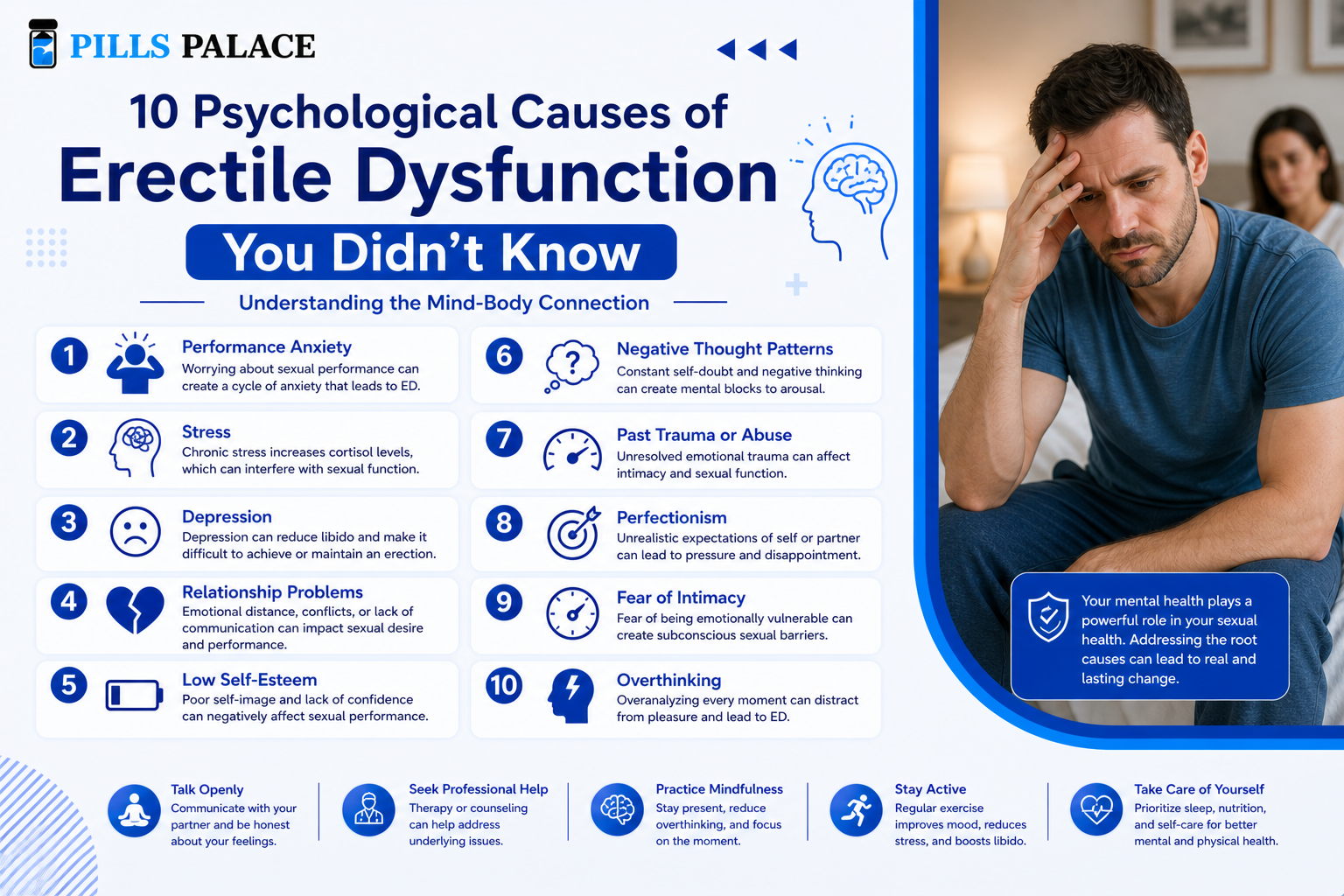
10 Psychological Causes of Erectile Dysfunction You Didn’t Know
10 Psychological Causes of Erectile Dysfunction You Didn’t Know
Erectile dysfunction (ED) is a common condition that affects millions of men worldwide. While it is often associated with physical factors such as age, health conditions, and medication side effects, psychological causes can also play a significant role in the development and maintenance of ED. In this article, we will explore 10 psychological causes of erectile dysfunction that you may not be aware of, and provide guidance on how to identify and address these underlying issues.
1. Performance Anxiety
Performance anxiety is a common psychological cause of ED. It refers to the fear of not being able to perform sexually, which can lead to anxiety, stress, and ultimately, erectile dysfunction. This fear can be triggered by a variety of factors, including past experiences, relationship issues, or societal pressure to perform. To overcome performance anxiety, it is essential to communicate openly with your partner, focus on the pleasure and intimacy of sex, and seek professional help if needed.
2. Stress and Anxiety
Stress and anxiety can have a significant impact on sexual function, including erectile dysfunction. When we experience stress, our body’s “fight or flight” response is triggered, which can lead to a decrease in blood flow to the penis, making it difficult to achieve an erection. Additionally, anxiety can cause us to become preoccupied with worries and concerns, making it challenging to relax and enjoy sex. Practicing stress-reducing techniques such as meditation, yoga, or deep breathing can help alleviate stress and anxiety, and improve overall sexual function.
3. Depression
Depression is a common mental health condition that can affect sexual function, including erectile dysfunction. Depression can lead to a loss of interest in sex, decreased libido, and difficulty achieving or maintaining an erection. Additionally, antidepressant medications can also contribute to ED. If you are experiencing symptoms of depression, it is essential to seek professional help from a mental health expert. They can help you develop a treatment plan that addresses your depression and ED, and improves your overall well-being.
4. Relationship Issues
Relationship issues can also contribute to erectile dysfunction. Conflict, lack of communication, and intimacy issues can all impact sexual function. Additionally, feeling unhappy or unfulfilled in a relationship can lead to a decrease in libido and erectile dysfunction. To address relationship issues, it is essential to communicate openly and honestly with your partner, seek couples therapy if needed, and focus on building a strong and healthy relationship.
5. Low Self-Esteem
Low self-esteem can have a significant impact on sexual function, including erectile dysfunction. When we feel insecure or inadequate, it can lead to anxiety, stress, and decreased confidence, making it challenging to perform sexually. To build self-esteem, it is essential to focus on positive self-talk, practice self-care, and engage in activities that promote self-confidence and self-worth.
6. Past Trauma
Past trauma, such as sexual abuse or assault, can also contribute to erectile dysfunction. Trauma can lead to anxiety, fear, and avoidance of sex, making it challenging to achieve or maintain an erection. If you have experienced past trauma, it is essential to seek professional help from a mental health expert. They can help you develop a treatment plan that addresses your trauma and ED, and improves your overall well-being.
7. Body Image Issues
Body image issues can also impact sexual function, including erectile dysfunction. When we feel insecure or unhappy with our body, it can lead to anxiety, stress, and decreased confidence, making it challenging to perform sexually. To address body image issues, it is essential to focus on positive self-talk, practice self-care, and engage in activities that promote self-confidence and self-worth.
8. Fear of Intimacy
Fear of intimacy can also contribute to erectile dysfunction. When we fear getting close to others, it can lead to anxiety, stress, and avoidance of sex, making it challenging to achieve or maintain an erection. To overcome fear of intimacy, it is essential to communicate openly with your partner, focus on building trust and connection, and seek professional help if needed.
9. Shame and Guilt
Shame and guilt can also impact sexual function, including erectile dysfunction. When we feel ashamed or guilty about our desires, needs, or past experiences, it can lead to anxiety, stress, and decreased confidence, making it challenging to perform sexually. To address shame and guilt, it is essential to practice self-compassion, seek support from loved ones or a mental health expert, and focus on building self-confidence and self-worth.
10. Societal Pressure
Societal pressure to perform sexually can also contribute to erectile dysfunction. When we feel pressured to conform to societal expectations or norms, it can lead to anxiety, stress, and decreased confidence, making it challenging to perform sexually. To overcome societal pressure, it is essential to focus on your own needs and desires, communicate openly with your partner, and seek support from loved ones or a mental health expert if needed.
In conclusion, erectile dysfunction is a complex condition that can be influenced by a variety of psychological factors. By understanding and addressing these underlying issues, you can improve your overall well-being and sexual health. Remember to communicate openly with your partner, seek professional help if needed, and focus on building a strong and healthy relationship. With the right support and guidance, you can overcome erectile dysfunction and achieve a fulfilling and satisfying sex life.
What to Do Next
If you are experiencing erectile dysfunction and suspect that psychological factors may be contributing to your condition, there are several steps you can take:
- Consult a mental health expert: A therapist or counselor can help you identify and address underlying psychological issues that may be contributing to your ED.
- Practice stress-reducing techniques: Stress and anxiety can exacerbate ED. Practicing stress-reducing techniques such as meditation, yoga, or deep breathing can help alleviate stress and improve overall sexual function.
- Communicate openly with your partner: Open and honest communication with your partner can help you build a stronger and healthier relationship, and improve your overall sexual function.
- Focus on building self-confidence and self-worth: Building self-confidence and self-worth can help you overcome anxiety, stress, and decreased confidence, making it easier to perform sexually.
Final Thoughts
Erectile dysfunction is a common condition that can be influenced by a variety of psychological factors. By understanding and addressing these underlying issues, you can improve your overall well-being and sexual health. Remember to seek support from loved ones, mental health experts, and healthcare professionals, and focus on building a strong and healthy relationship. With the right support and guidance, you can overcome erectile dysfunction and achieve a fulfilling and satisfying sex life.