
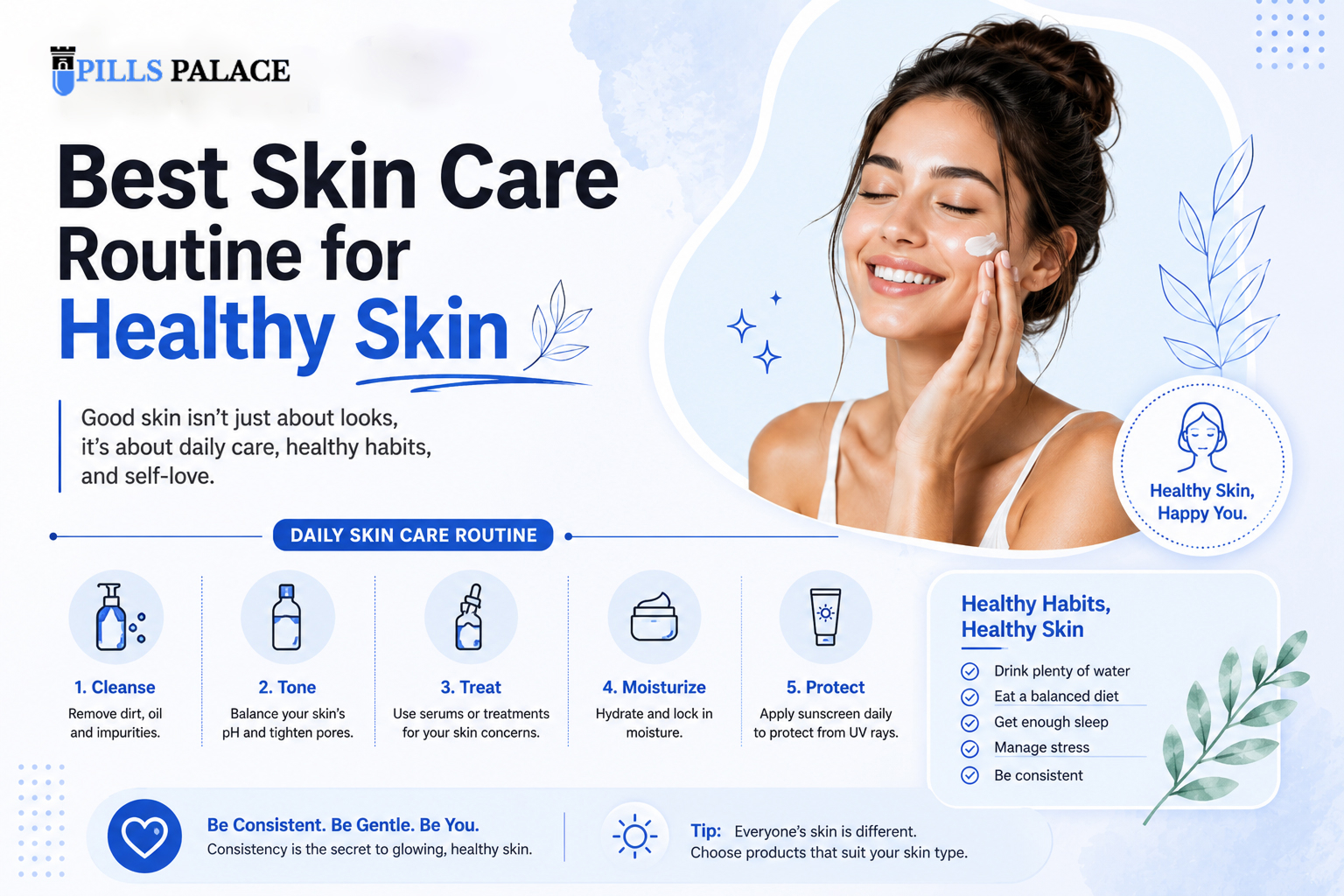
Best Skin Care Routine for Healthy Skin
A good skin care routine is essential for maintaining healthy, glowing skin. With so many products and treatments available, it can be overwhelming to know where to start. In this article, we’ll break down the best skin care routine for healthy skin, including how to create a personalized routine that suits your skin type and concerns.
Understanding Your Skin Type
Before you can create an effective skin care routine, you need to understand your skin type. There are five main skin types: normal, dry, oily, combination, and sensitive. Each skin type has its own unique characteristics and needs.
- Normal skin: Normal skin is balanced and neither too oily nor too dry. It looks smooth and even-toned, with small pores.
- Dry skin: Dry skin is tight and flaky, with visible fine lines and wrinkles. It may feel rough to the touch.
- Oily skin: Oily skin is shiny and greasy, with large pores. It may be prone to acne and blackheads.
- Combination skin: Combination skin is a mix of oily and dry skin, with oily areas typically found on the T-zone (forehead, nose, and chin).
- Sensitive skin: Sensitive skin is easily irritated, with symptoms such as redness, itching, and stinging.
Basic Skin Care Steps
Regardless of your skin type, there are some basic skin care steps that should be included in your routine:
- Cleansing: Cleansing is the first step in any skin care routine. It helps to remove dirt, oil, and makeup from the skin. Choose a gentle cleanser that suits your skin type.
- Toning: Toning helps to balance the skin’s pH and remove any remaining impurities. Look for a toner that is formulated for your skin type.
- Exfoliating: Exfoliating helps to remove dead skin cells and improve skin texture. Exfoliate one to three times a week, depending on your skin type and concerns.
- Moisturizing: Moisturizing helps to hydrate and protect the skin. Choose a moisturizer that is formulated for your skin type and concerns.
- Sunscreen: Sunscreen is an essential step in any skin care routine. It helps to protect the skin from UV damage and prevent premature aging. Choose a broad-spectrum sunscreen with an SPF of at least 30.
Additional Skin Care Steps
In addition to the basic skin care steps, there are some additional steps that you may want to consider:
- Essence: Essence is a concentrated serum that helps to deliver active ingredients to the skin. It can be used to address specific skin concerns such as acne, aging, or hyperpigmentation.
- Serum: Serum is a concentrated treatment product that helps to address specific skin concerns such as fine lines, wrinkles, or dark spots.
- Eye cream: Eye cream is a specialized product that helps to address concerns such as dark circles, puffiness, and fine lines around the eyes.
- Mask: Mask is a treatment product that helps to provide an intense dose of hydration, exfoliation, or brightening to the skin. Use a mask one to three times a week, depending on your skin type and concerns.
Tips for Maintaining Healthy Skin
In addition to following a consistent skin care routine, there are some other tips that can help to maintain healthy, glowing skin:
- Stay hydrated: Drinking plenty of water helps to keep the skin hydrated and plump.
- Get enough sleep: Getting enough sleep helps to reduce stress and promote skin regeneration.
- Exercise regularly: Exercise helps to improve circulation and promote collagen production.
- Eat a healthy diet: Eating a diet rich in fruits, vegetables, and omega-3 fatty acids helps to provide the skin with essential nutrients and antioxidants.
- Manage stress: Managing stress helps to reduce inflammation and promote skin health.
Common Skin Concerns
There are many common skin concerns that can affect the skin, including:
- Acne: Acne is a skin condition that is characterized by clogged pores, inflammation, and scarring.
- Aging: Aging is a natural process that can cause fine lines, wrinkles, and age spots.
- Hyperpigmentation: Hyperpigmentation is a skin condition that is characterized by dark spots or discoloration.
- Dryness: Dryness is a skin condition that can cause tightness, flakiness, and irritation.
- Sensitivity: Sensitivity is a skin condition that can cause redness, itching, and stinging.
Conclusion
A good skin care routine is essential for maintaining healthy, glowing skin. By understanding your skin type and concerns, and following a consistent skin care routine, you can help to promote healthy, radiant skin. Remember to stay hydrated, get enough sleep, exercise regularly, eat a healthy diet, and manage stress to help maintain healthy skin. If you have specific skin concerns, such as acne, aging, or hyperpigmentation, consider using additional products or treatments to help address these concerns Online pharmacy pillspalace .
FAQs
Here are some frequently asked questions about skin care:
- Q: What is the best skin care routine for my skin type? A: The best skin care routine for your skin type will depend on your individual skin concerns and needs. Consider consulting with a dermatologist or skincare professional to determine the best routine for your skin.
- Q: How often should I exfoliate my skin? A: Exfoliate one to three times a week, depending on your skin type and concerns.
- Q: What is the difference between a toner and an essence? A: A toner helps to balance the skin’s pH and remove impurities, while an essence is a concentrated serum that helps to deliver active ingredients to the skin.
- Q: Can I use a moisturizer with SPF as my sunscreen? A: While a moisturizer with SPF can provide some protection, it is generally not enough to provide adequate protection against UV damage. Use a broad-spectrum sunscreen with an SPF of at least 30 in addition to your moisturizer.