
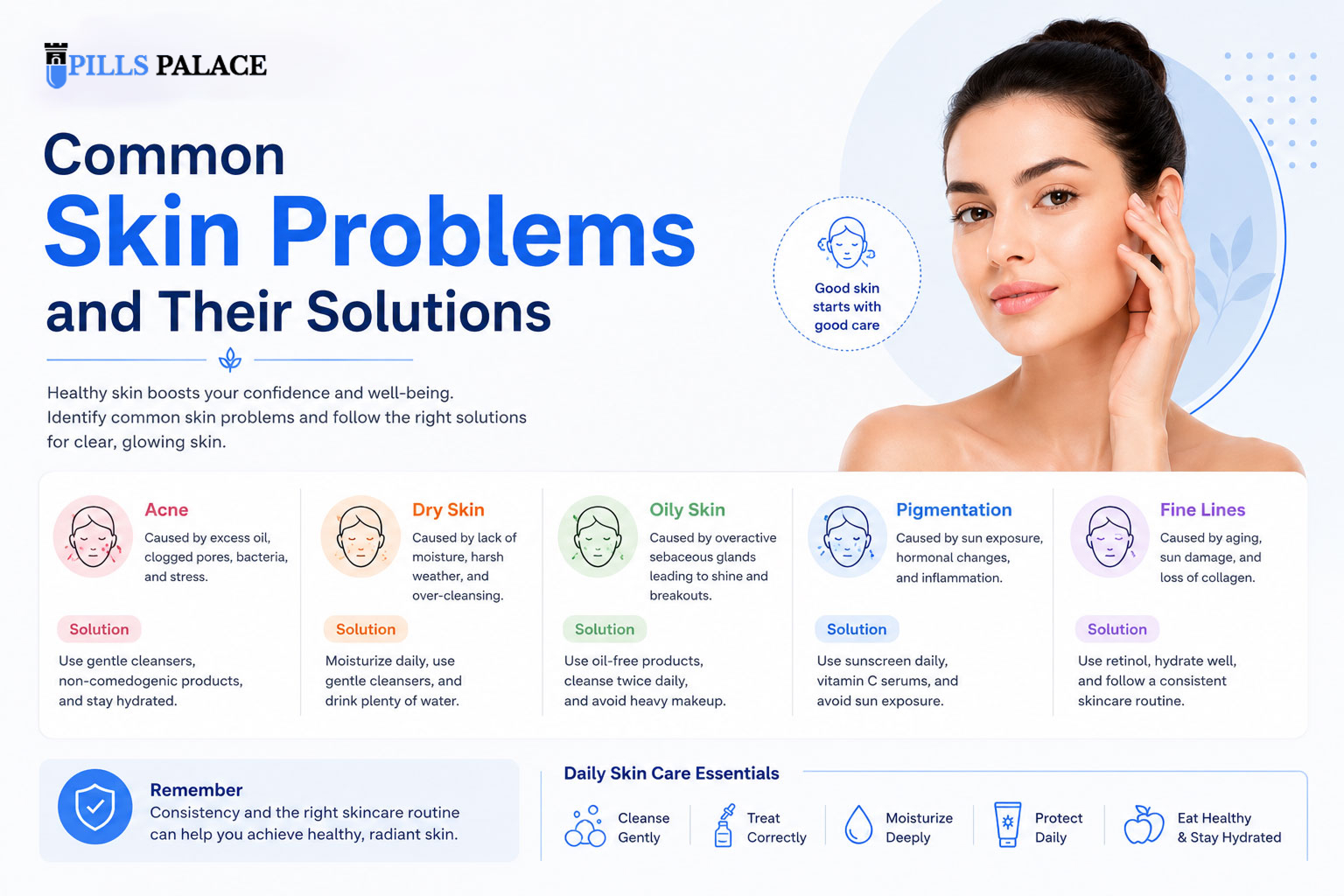
Common Skin Problems and Their Solutions
Having healthy and glowing skin is a desire that many of us strive for, but sometimes skin problems can get in the way. From acne and dry skin to eczema and psoriasis, there are numerous skin issues that can affect our self-confidence and overall well-being. In this blog post, we’ll explore the most common skin problems and their effective solutions, so you can achieve the radiant and healthy skin you deserve.
1. Acne
Acne is one of the most common skin problems that affects millions of people worldwide. It occurs when the pores on the skin become clogged with oil, dead skin cells, and bacteria, leading to inflammation and breakouts. There are several types of acne, including whiteheads, blackheads, papules, and cysts.
To treat acne, it’s essential to maintain good skin hygiene and use products that are suitable for your skin type. Here are some effective solutions:
- Use a gentle cleanser that contains salicylic acid or benzoyl peroxide to unclog pores and reduce inflammation.
- Apply a spot treatment that contains tea tree oil or sulfur to target individual pimples.
- Exfoliate your skin regularly to remove dead skin cells and prevent clogged pores.
- Avoid picking or popping pimples, as this can lead to scarring and further inflammation.
2. Dry Skin
Dry skin, also known as xerosis, is a common skin problem that occurs when the skin loses its natural moisture barrier. This can be due to various factors, such as cold weather, harsh soaps, and skin conditions like eczema or psoriasis. Dry skin can lead to itching, flakiness, and irritation.
To combat dry skin, try the following solutions:
- Use a moisturizer that is rich in emollients and humectants, such as hyaluronic acid or ceramides.
- Apply a gentle, fragrance-free cleanser that is formulated for dry skin.
- Exfoliate your skin gently with a chemical exfoliant or a physical exfoliant, such as a loofah or a gentle scrub.
- Avoid hot water and harsh soaps, which can strip the skin of its natural oils.
3. Eczema
Eczema, also known as atopic dermatitis, is a chronic skin condition that causes inflammation, itching, and dryness. It can occur anywhere on the body, but it’s most commonly found on the face, hands, and feet. Eczema can be triggered by various factors, including allergies, stress, and environmental factors.
To manage eczema, try the following solutions:
- Use a gentle, fragrance-free moisturizer that is rich in emollients and humectants.
- Apply a topical corticosteroid cream or ointment to reduce inflammation and itching.
- Avoid harsh soaps and cleansers, which can strip the skin of its natural oils and exacerbate eczema.
- Keep your skin hydrated by drinking plenty of water and using a humidifier to add moisture to the air.
4. Psoriasis
Psoriasis is a chronic skin condition that causes thick, scaly patches on the skin. It occurs when the immune system sends faulty signals to the skin cells, leading to an overproduction of skin cells. Psoriasis can be painful and itchy, and it can also lead to emotional distress.
To manage psoriasis, try the following solutions:
- Use a topical corticosteroid cream or ointment to reduce inflammation and itching.
- Apply a moisturizer that is rich in emollients and humectants to help lock in moisture and reduce dryness.
- Exfoliate your skin gently with a chemical exfoliant or a physical exfoliant, such as a loofah or a gentle scrub.
- Avoid triggers such as stress, cold weather, and certain medications, which can exacerbate psoriasis.
5. Hyper-Pigmentation
Hyper-pigmentation, also known as dark spots or age spots, is a common skin problem that occurs when there is an overproduction of melanin in the skin. This can be due to various factors, such as sun exposure, hormonal changes, and skin injuries.
To treat hyper-pigmentation, try the following solutions:
- Use a sunscreen with a high SPF to prevent further darkening of the skin.
- Apply a topical cream or serum that contains ingredients such as hydroquinone, retinol, or vitamin C, which can help to lighten the skin.
- Exfoliate your skin regularly to help remove dead skin cells and promote cell turnover.
- Avoid picking or scratching the skin, as this can lead to further hyper-pigmentation.
Conclusion
Common skin problems can be frustrating and affect our self-confidence, but there are many effective solutions available. By maintaining good skin hygiene, using products that are suitable for our skin type, and avoiding triggers, we can prevent and treat skin issues such as acne, dry skin, eczema, psoriasis, and hyper-pigmentation. Remember to always consult with a dermatologist or skincare professional if you’re unsure about the best course of treatment for your skin.
Additional Tips
Here are some additional tips to help you achieve healthy and glowing skin:
- Stay hydrated by drinking plenty of water throughout the day.
- Get enough sleep to help your skin regenerate and repair itself.
- Exercise regularly to improve blood flow and boost collagen production.
- Avoid smoking and excessive alcohol consumption, which can damage the skin and lead to premature aging.
- Eat a balanced diet that is rich in fruits, vegetables, and whole grains to provide your skin with the nutrients it needs to stay healthy.
By following these tips and solutions, you can achieve the healthy and radiant skin you deserve. Remember to always be patient and consistent, as it may take some time to see results. With the right skincare routine and lifestyle habits, you can say goodbye to common skin problems and hello to glowing, healthy skin.
Note: The above HTML content is designed to provide a basic structure for an SEO blog post on common skin problems and their solutions. You can further optimize the content by adding meta tags, header tags, and internal/external links to improve its search engine ranking and user experience.