
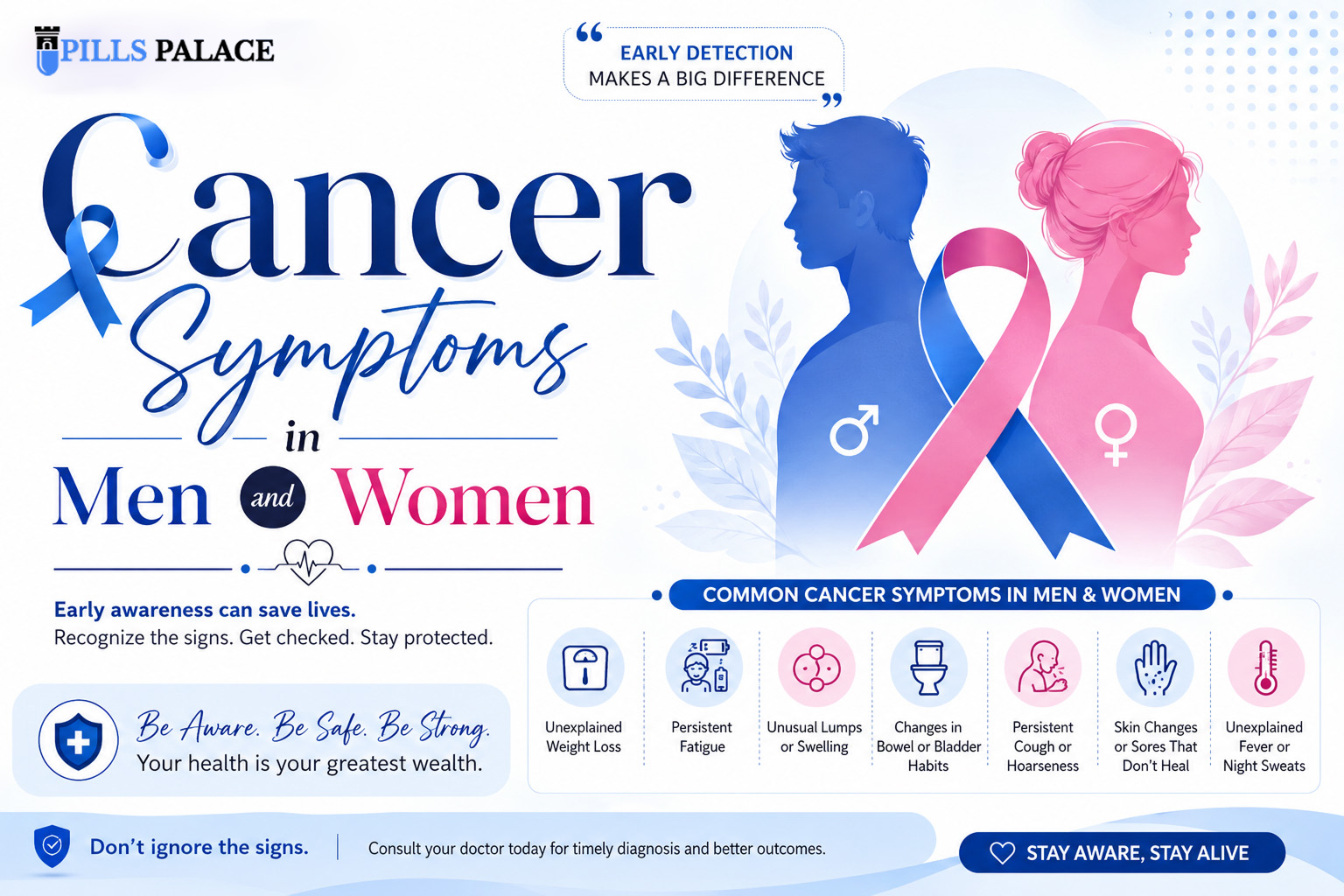
Cancer Symptoms in Men and Women
Cancer Symptoms in Men and Women: Early Detection is Key
Cancer is a leading cause of death worldwide, affecting both men and women. While some cancer symptoms can be specific to certain types of cancer, others can be common to multiple types. In this article, we will discuss the common cancer symptoms in men and women, and the importance of early detection for effective treatment and improved survival rates.
Common Cancer Symptoms in Men
Men are more likely to develop certain types of cancer, such as prostate, lung, and colorectal cancer. Some common cancer symptoms in men include:
- Pain or difficulty urinating: This can be a symptom of prostate cancer, which is one of the most common types of cancer in men.
- Blood in the urine or semen: This can be a symptom of bladder or kidney cancer.
- Difficulty swallowing or pain while swallowing: This can be a symptom of esophageal cancer.
- Unexplained weight loss: This can be a symptom of various types of cancer, including lung, stomach, and pancreatic cancer.
- Fatigue or weakness: This can be a symptom of various types of cancer, including leukemia and lymphoma.
Common Cancer Symptoms in Women
Women are more likely to develop certain types of cancer, such as breast, ovarian, and cervical cancer. Some common cancer symptoms in women include:
- Lumps or thickening in the breast: This can be a symptom of breast cancer, which is one of the most common types of cancer in women.
- Abnormal vaginal bleeding: This can be a symptom of cervical or uterine cancer.
- Pelvic pain or pressure: This can be a symptom of ovarian cancer.
- Unexplained weight loss: This can be a symptom of various types of cancer, including stomach and pancreatic cancer.
- Fatigue or weakness: This can be a symptom of various types of cancer, including leukemia and lymphoma.
Importance of Early Detection
Early detection of cancer is crucial for effective treatment and improved survival rates. When cancer is detected early, it is often more treatable and curable. Some benefits of early detection include:
- Improved treatment options: Early detection allows for more treatment options, including surgery, chemotherapy, and radiation therapy.
- Increased survival rates: Early detection can improve survival rates, with some types of cancer having a 90% or higher survival rate when detected early.
- Reduced risk of metastasis: Early detection can reduce the risk of cancer spreading to other parts of the body, which can improve treatment outcomes.
Risk Factors for Cancer
Certain risk factors can increase a person’s likelihood of developing cancer. Some common risk factors include:
- Family history: A family history of cancer can increase a person’s risk of developing certain types of cancer.
- Age: The risk of cancer increases with age, with most cancer cases occurring in people over the age of 65.
- Lifestyle factors: Lifestyle factors, such as smoking, obesity, and lack of physical activity, can increase the risk of certain types of cancer.
: Environmental factors, such as exposure to radiation or certain chemicals, can increase the risk of certain types of cancer.
Prevention and Screening
Prevention and screening are key to reducing the risk of cancer and detecting it early. Some ways to reduce the risk of cancer include:
- Quit smoking: Quitting smoking can reduce the risk of lung, throat, and other types of cancer.
- Maintain a healthy weight: Maintaining a healthy weight can reduce the risk of certain types of cancer, including breast, colon, and kidney cancer.
- Exercise regularly: Regular exercise can reduce the risk of certain types of cancer, including breast, colon, and prostate cancer.
- Get screened regularly: Regular screening can help detect cancer early, when it is more treatable and curable.
Conclusion
Cancer is a leading cause of death worldwide, affecting both men and women. Early detection is crucial for effective treatment and improved survival rates. By understanding the common cancer symptoms in men and women, and taking steps to reduce the risk of cancer, individuals can improve their chances of detecting cancer early and improving their treatment outcomes. Remember, early detection is key, so it’s essential to get screened regularly and maintain a healthy lifestyle to reduce the risk of cancer.
Additional Resources
For more information on cancer symptoms, risk factors, and prevention, visit the following resources:
- American Cancer Society
- Centers for Disease Control and Prevention (CDC)
- National Institutes of Health (NIH)