
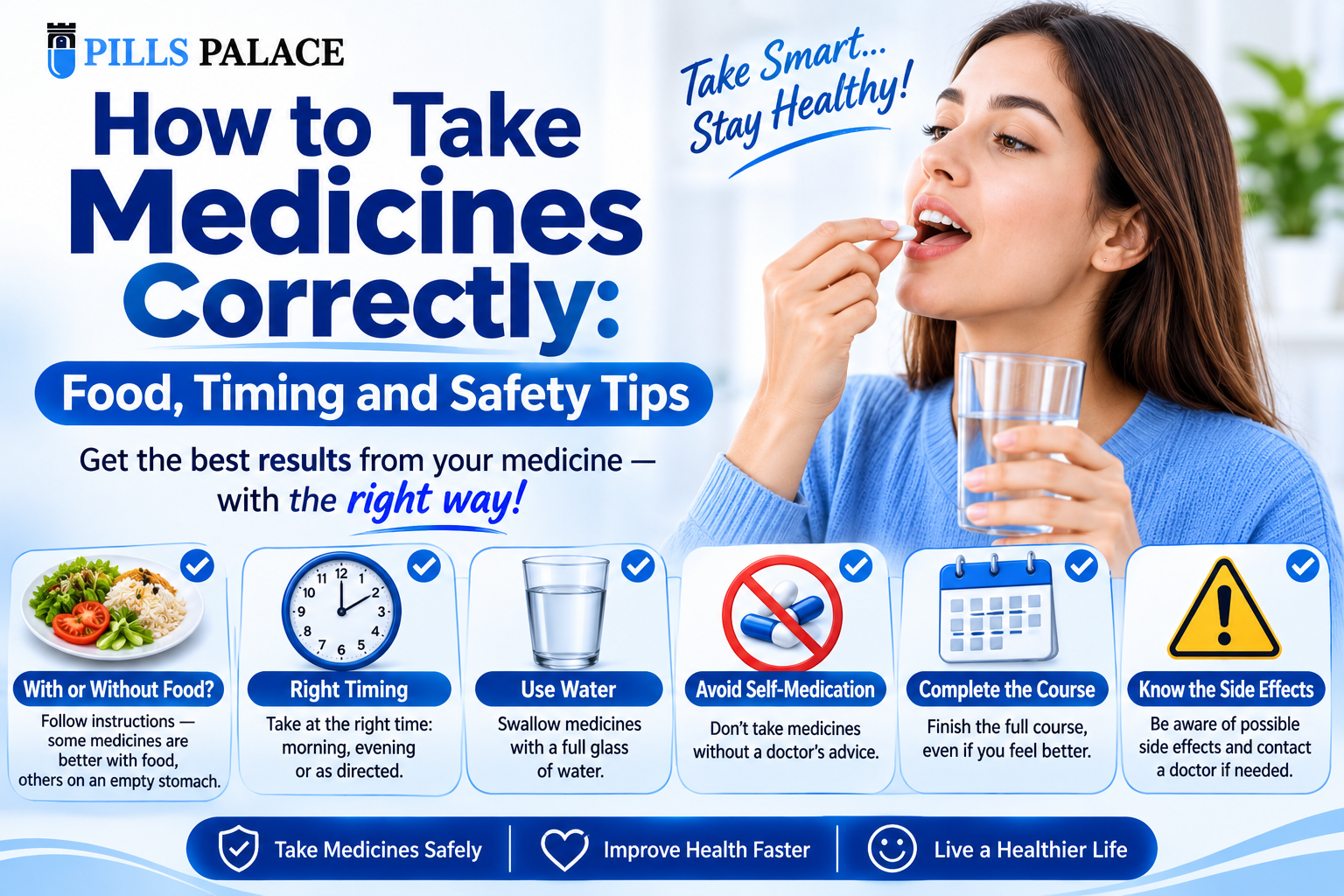
How to Take Medicines Correctly: Food, Timing and Safety Tips
Always take a medicine exactly as the label or your doctor says: the right dose, at the right time, with or without food as directed. Taking medicines incorrectly can make them work less well or cause side effects, so a few simple habits make a big difference.
Read the Label First
Before each new medicine, check the name and strength, the dose, how often to take it, and warnings such as “avoid alcohol” or “may cause drowsiness”. Keep the leaflet in the pack and read the section on side effects and interactions. If anything is unclear, ask your pharmacist.
With Food or Without Food?
Some medicines are best taken with food, for example to reduce stomach upset. Others must be taken on an empty stomach because food can lower how much is absorbed. The label or leaflet will tell you, and the timing differs between medicines, so do not assume one rule fits all.
“Empty stomach” usually means about one hour before or two hours after a meal, but follow your pharmacist’s instructions.
Timing and Consistency
- Take medicines at the same times each day to keep levels steady
- Use a phone alarm, a pill organiser or a daily routine such as brushing teeth to remember
- Check the leaflet or ask your pharmacist if you miss a dose
- Doubling up after a missed dose unless advised
- Guessing when to take a medicine
- Changing the timing without asking
Finish Courses and Do Not Stop Early
If a doctor prescribes an antibiotic, take it as directed. Antibiotics are only for bacterial infections; read cold vs flu: do you really need antibiotics and how long amoxicillin takes to work. For long-term medicines, such as those for blood pressure, do not stop unless your doctor says so.
Avoid Interactions
Some medicines interact with other medicines, supplements, alcohol, grapefruit juice or certain foods. Tell your doctor and pharmacist about everything you take, including herbal products. Do not take two products with the same active ingredient at the same time.
Take Them Safely
When to Call a Doctor or Pharmacist
- You have side effects that worry you
- You develop a rash or swelling
- You suspect an overdose
- You are unsure how to take a medicine
Have a question about your medicine?
Talk to a pharmacist before changing how you take any medicine.
Contact usFrequently Asked Questions
Can I take my medicine with milk or juice?
It depends on the medicine. Some, such as certain antibiotics, interact with dairy or juice, so water is the safest default.
What if I forget to take it with food?
Check the leaflet or ask your pharmacist what to do for that medicine.
Is it safe to take several medicines together?
Often yes, but interactions are possible, so ask your pharmacist to review your list.
Conclusion
Read the label, follow the timing instructions, keep a routine and ask questions. Using medicines correctly helps them work as intended and keeps you safe. For more everyday health habits, see preventive health tips for adults.
More Reading
Sources: U.S. Food and Drug Administration (FDA), “Using Medicines Safely” guidance; World Health Organization (WHO) on medication safety; NHS guidance on taking medicines.