
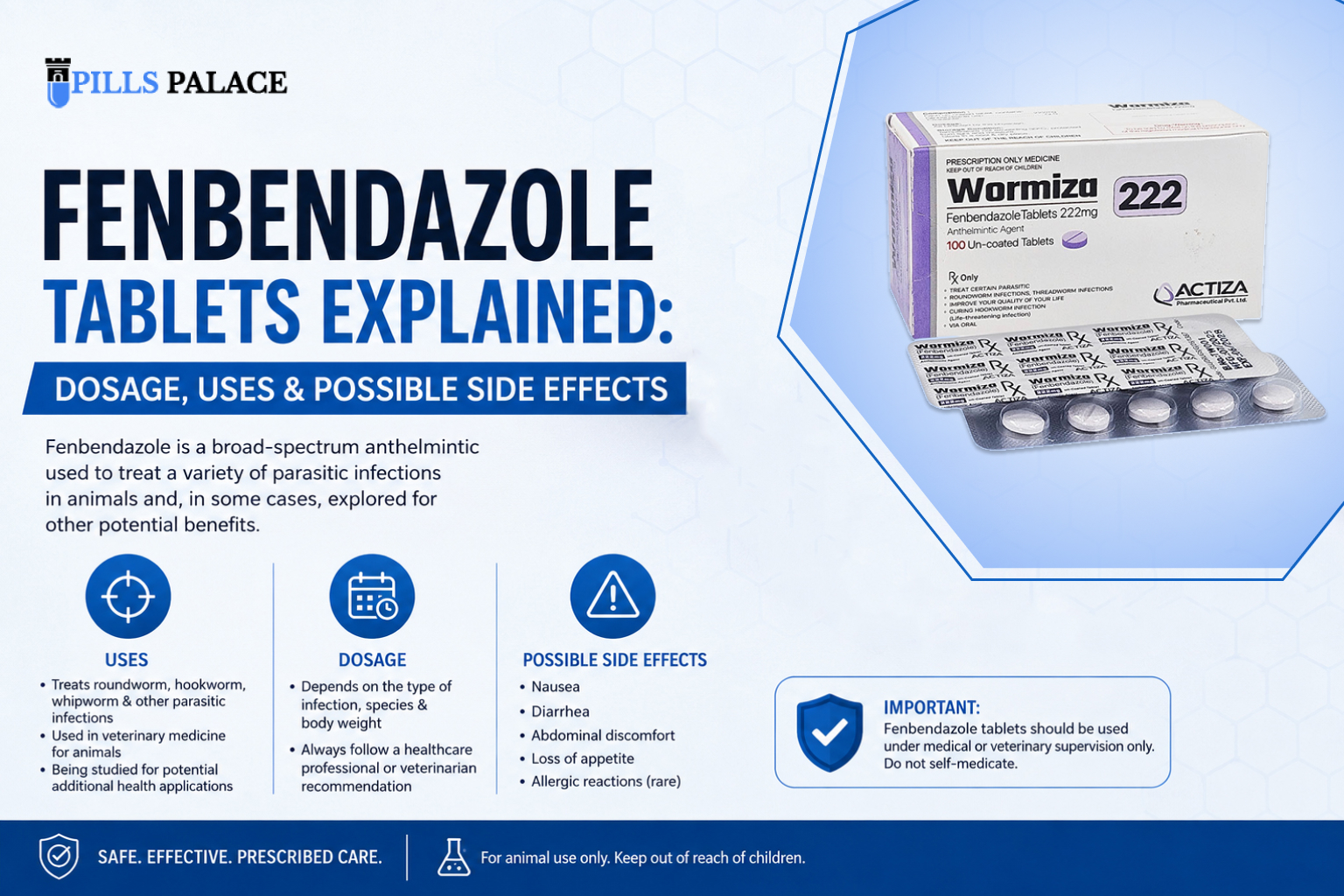
Fenbendazole Tablets Explained: Dosage, Uses & Possible Side Effects
Fenbendazole tablets are a type of anthelmintic medication that is used to treat parasitic infections in both animals and humans. The medication works by targeting and killing parasites, such as worms and other helminths, in the body. In this article, we will delve into the uses, dosage, and possible side effects of fenbendazole tablets, providing you with a comprehensive understanding of this medication.
What is Fenbendazole?
Fenbendazole is a broad-spectrum anthelmintic agent that is effective against a wide range of parasites, including roundworms, hookworms, whipworms, and tapeworms. It is commonly used in veterinary medicine to treat parasitic infections in animals, such as dogs, cats, and horses. However, it is also used in human medicine to treat certain types of parasitic infections, such as giardiasis and hookworm infections.
Uses of Fenbendazole Tablets
Fenbendazole tablets are used to treat a variety of parasitic infections, including:
- Roundworm infections: Fenbendazole is effective against roundworms, including Toxocara canis, Toxascaris leonina, and Anisakis species.
- Hookworm infections: Fenbendazole is used to treat hookworm infections, including Ancylostoma caninum and Uncinaria stenocephala.
- Whipworm infections: Fenbendazole is effective against whipworms, including Trichuris vulpis.
- Tapeworm infections: Fenbendazole is used to treat tapeworm infections, including <i-Taenia species and Diphyllobothrium species.
- Giardiasis: Fenbendazole is used to treat giardiasis, an intestinal infection caused by the parasite Giardia lamblia.
Dosage of Fenbendazole Tablets
The dosage of fenbendazole tablets varies depending on the specific condition being treated and the weight of the animal or human being treated. The following are general guidelines for the dosage of fenbendazole tablets:
- Adults and children over 12 years old: The recommended dose is 500-1000 mg per day for 3-5 days.
- Children under 12 years old: The recommended dose is 250-500 mg per day for 3-5 days.
- Animals: The recommended dose varies depending on the weight of the animal, but a general guideline is 10-20 mg per kilogram of body weight per day for 3-5 days.
Possible Side Effects of Fenbendazole Tablets
Like all medications, fenbendazole tablets can cause side effects in some individuals. The following are possible side effects of fenbendazole tablets:
- Gastrointestinal side effects: Fenbendazole tablets can cause gastrointestinal side effects, such as nausea, vomiting, diarrhea, and abdominal pain.
- Headache: Fenbendazole tablets can cause headaches in some individuals.
- Dizziness: Fenbendazole tablets can cause dizziness and lightheadedness in some individuals.
- Allergic reactions: Fenbendazole tablets can cause allergic reactions, such as hives, itching, and difficulty breathing, in some individuals.
Precautions and Contraindications
The following are precautions and contraindications to consider when taking fenbendazole tablets:
- Pregnancy and lactation: Fenbendazole tablets should not be used in pregnant or lactating women, as the medication can harm the fetus or baby.
- Kidney or liver disease: Fenbendazole tablets should be used with caution in individuals with kidney or liver disease, as the medication can worsen these conditions.
- Allergic reactions: Individuals who have experienced allergic reactions to fenbendazole or other anthelmintic medications should not take fenbendazole tablets.
Conclusion
In conclusion, fenbendazole tablets are a type of anthelmintic medication that is used to treat parasitic infections in both animals and humans. The medication works by targeting and killing parasites, such as worms and other helminths, in the body. While fenbendazole tablets are generally safe and effective, they can cause side effects, such as gastrointestinal side effects, headaches, and allergic reactions, in some individuals. It is essential to follow the recommended dosage and precautions when taking fenbendazole tablets and to consult a healthcare professional if any side effects or concerns arise.
By understanding the uses, dosage, and possible side effects of fenbendazole tablets, you can make informed decisions about your health and the health of your pets. Remember to always consult a healthcare professional before taking any medication, and follow their instructions carefully to ensure safe and effective treatment.
Please note: The information provided in this article is for general purposes only and is not intended to be used as medical advice. You should always consult a healthcare professional before taking any medication, including fenbendazole tablets. They can provide personalized advice and guidance based on your specific medical needs and health status.