

How Stress and Anxiety Cause Insomnia
Are you tired of lying awake at night, unable to shake off the feeling of stress and anxiety that’s been plaguing you all day? You’re not alone. Millions of people around the world suffer from insomnia, a sleep disorder that can be caused by a variety of factors, including stress and anxiety. In this blog, we’ll explore the link between Stress, Anxiety, and Insomnia, and provide you with expert tips and strategies to break the cycle and improve your sleep quality.
The Link Between Stress and Insomnia
Stress and anxiety are two of the most common causes of insomnia. When we experience stress, our body’s “fight or flight” response is triggered, releasing stress hormones like cortisol and adrenaline into our system. These hormones can make it difficult to fall asleep and stay asleep, leading to insomnia. Anxiety can also interfere with sleep, as the constant worrying and ruminating can keep our minds racing, making it hard to relax and fall asleep.
Furthermore, stress and anxiety can lead to a range of physical and emotional symptoms, including tension headaches, digestive problems, and irritability. These symptoms can further exacerbate insomnia, creating a vicious cycle that’s difficult to break. For example, a person who is experiencing stress and anxiety may have trouble falling asleep due to racing thoughts and a racing heart. As a result, they may lie awake for hours, which can lead to fatigue, decreased productivity, and a range of other negative consequences.
The Impact of Insomnia on Mental Health
Insomnia can have a significant impact on mental health, exacerbating symptoms of anxiety and depression. When we don’t get enough sleep, our brains can’t function properly, leading to impaired cognitive function, mood disturbances, and a range of other negative effects. Chronic insomnia can also lead to the development of mental health disorders, including depression, anxiety disorders, and bipolar disorder.
In addition, insomnia can affect our relationships, work performance, and overall quality of life. For example, a person who is struggling with insomnia may have trouble concentrating at work, which can lead to decreased productivity and a range of other negative consequences. They may also have trouble interacting with friends and family, which can lead to social isolation and a range of other negative effects.
The Science Behind Stress and Insomnia
Research has shown that stress and anxiety can disrupt the body’s natural sleep-wake cycle, also known as the circadian rhythm. The circadian rhythm is regulated by a group of cells in the brain called the suprachiasmatic nucleus (SCN), which responds to light and dark signals from the environment to synchronize the body’s physiological processes with the 24-hour day-night cycle.
When we experience stress and anxiety, our SCN can become disrupted, leading to changes in our sleep patterns. For example, stress can cause the release of cortisol, which can suppress the production of melatonin, the hormone responsible for regulating sleep. This can lead to insomnia, as well as a range of other sleep disorders.
In addition, stress and anxiety can affect the brain’s neurotransmitters, including serotonin and dopamine, which play a critical role in regulating mood, appetite, and sleep. When these neurotransmitters are out of balance, it can lead to insomnia, as well as a range of other negative effects.
The Role of Lifestyle Factors
Lifestyle factors can also play a role in the development of insomnia. For example, a person who is experiencing stress and anxiety may turn to caffeine or nicotine to help them relax, but these substances can actually interfere with sleep. Similarly, a person who is experiencing stress and anxiety may have trouble establishing a consistent sleep schedule, which can lead to insomnia.
In addition, lifestyle factors such as exercise, diet, and screen time can also affect sleep quality. For example, a person who is experiencing stress and anxiety may have trouble falling asleep due to a lack of physical activity, or they may have trouble staying asleep due to a diet that is high in sugar and caffeine.
Read More: A Mixing of Modafinil and Caffeine
Breaking the Cycle: Tips and Strategies for Improving Sleep Quality
Fortunately, there are many ways to break the cycle of stress, anxiety, and insomnia. Here are some expert tips and strategies to help you improve your sleep quality:
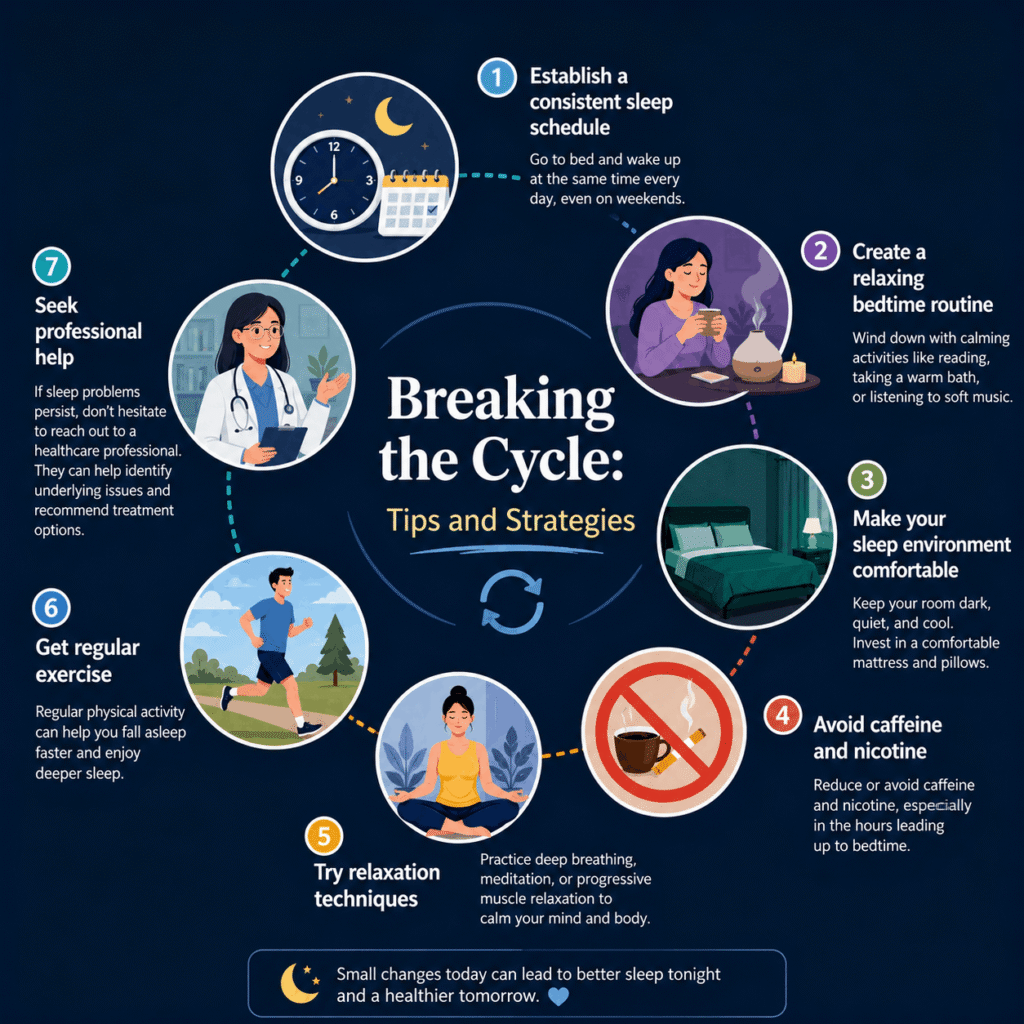
- Establish a consistent sleep schedule: Go to bed and wake up at the same time every day, including weekends.
- Create a relaxing bedtime routine: Engage in activities that help you relax, such as reading a book, taking a warm bath, or practicing yoga or meditation.
- Make your sleep environment comfortable: Keep your bedroom cool, dark, and quiet, and invest in a comfortable mattress and pillows.
- Avoid caffeine and nicotine: Both of these substances can interfere with sleep, so it’s best to avoid them altogether.
- Try relaxation techniques: Techniques such as deep breathing, progressive muscle relaxation, and mindfulness meditation can help you relax and prepare for sleep.
- Get regular exercise: Regular physical activity can help reduce stress and anxiety, as well as improve sleep quality.
- Seek professional help: If you’re struggling with insomnia, it’s a good idea to seek help from a mental health professional. They can help you identify the underlying causes of your insomnia and develop a plan to address them.
Additional Strategies for Managing Stress and Anxiety
In addition to the tips and strategies listed above, there are many other ways to manage stress and anxiety. For example, you can try journaling, which can help you process your emotions and clear your mind. You can also try spending time in nature, which can help you feel more grounded and relaxed.
Furthermore, you can try practicing gratitude, which can help you shift your focus away from stress and anxiety and towards the positive things in your life. You can also try connecting with others, which can help you feel more supported and less alone.
Conclusion
In conclusion, stress and anxiety are two of the most common causes of insomnia. By understanding the link between stress, anxiety, and Insomnia, and by implementing the tips and strategies outlined in this blog, you can break the cycle of stress, anxiety, and insomnia and improve your sleep quality. Remember, it’s not just about getting enough sleep, it’s about maintaining good mental health and overall well-being.
So, if you’re struggling with insomnia, don’t hesitate to seek help. Talk to a mental health professional, try relaxation techniques, and make lifestyle changes to improve your sleep quality. With time and effort, you can overcome insomnia and wake up feeling rested, refreshed, and ready to take on the day.